Bourbon

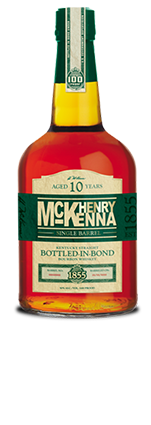
Henry McKenna 10 yr Bottled-In-Bond

Henry McKenna Single Barrel Kentucky Straight Bourbon Whiskey
Bottled-In-Bond Aged 10 Years, Barrel No: 1360

50% ABV
$30 to $35
Website
henry-mckenna-single-barrel-lrg-upd
What the Distillery Says:
In 1837, a young man from Ireland known for his remarkable whiskey-making skills, came to America with his family’s whiskey recipe that had been passed down for generations. Young Mr. McKenna settled in Kentucky and discovered the uniquely American drink known as Bourbon. McKenna instantly took a liking to Kentucky whiskey and set out to create a better Bourbon using his family’s recipe. To ensure the highest quality, he insisted that his Bourbon age in oak barrels before bottling. From this process, highly unusual for the time, emerged a remarkably smooth Bourbon boasting a distinctive character.

As the only extra aged Bottled-in-Bond Single Barrel Bourbon, Henry McKenna Single Barrel satisfies those looking for a real whiskey with real history. The super-premium status is conveyed through new packaging. The front label contains handwritten authentication of the barrel number and the barreled on date. It also emphasizes the Bottled-In-Bond designation and the 10 year age statement.

What Gary Says:
Nose: Oaky, subtly sweet with a citrus tinged fruitiness (although a bit astringent?)
Palate: Honey sweet, well balanced – not as much oak as I’d expect on a 10yr; really nice mouthfeel (not exactly creamy or silky, but somewhere in between.
Finish: Moderate in length.
Comments: I’ve only bought one Henry McKenna Single Barrel personally, and was so disappointed I’ve not bought a second. However I’ve tried several others prior, and a couple since – all of which have been a far sight better, including this sample (thanks Rich!) With any single barrel, variability is a risk you take – but at least they include the details on the label (so if you find a great barrel, you can pick up more – where some single barrel bourbons such as Elmer T Lee lack these important details). Considering the price point, age, and proof – I think this is a solid bourbon.
Rating: Stands Out

What Richard Says:
Nose: Nice vanilla and cinnamon interplay with oak notes.
Palate: Creamy in the mouth. Cinnamon, vanilla creme brulee, and a Hershey’s kiss milk chocolate note.
Finish: Dry with hints of black pepper and oak.
Comments: I found this particular bottle delicious but I’ve also noticed that the Henry McKennas seem to vary more from barrel to barrel than your typical single barrel bourbon. In general they range from average to stands out. If you can get it for around $30 then even if you get a less stellar barrel it’s a great cocktail bourbon for sure.
Rating: Stands Out

Henry McKenna 10 yr Bottled-In-Bond Read More »

Old Forester 2014 Birthday Bourbon

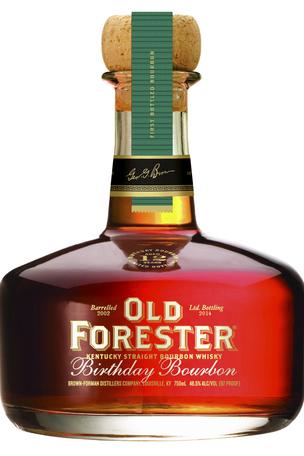
Old Forester Birthday Bourbon
Distilled 2002, Bottled 2014

49% ABV
$60
Website
OFBB14
What the Distillery Says:
Handcrafted by renowned Master Distiller Chris Morris, Old Forester Birthday Bourbon is vintage-dated bourbon, hand-selected from one specific day of production. The result is a one of a kind character and flavor that will never be replicated.

Each year on September 2nd – in honor of our founder George Garvin Brown’s birthday – Old Forester releases a limited-edition, 12-year old vintage-dated expression. Old Forester Birthday Bourbon has become a must-have for bourbon enthusiasts who want to experience the ultimate in rare handcrafted bourbon. Since its introduction in 2002, Old Forester Birthday Bourbon has received unprecedented acclaim, with an impressive collection of national and international whisky honors.

What Gary Says:
Nose: Furniture polish, oak, undertones of vanilla, with a hint of citrus; not as spicey as 2013, yet more acidic/sharp.
Palate: Nice mouthfeel, well balanced between sweet, spice, and wood.
Finish: Medium in length.
Comments: The nose was out of synch with the palate for me, as the nose said “Wow – think twice before consuming”, while I did enjoy the palate. I’ve been disappointed with the steady price increases of this – not quite double what I paid for my first bottle in 2011, but getting close.
Rating: Average

What Richard Says:
Nose: This year’s is a little hotter on the nose than recent releases. Heavier polished wood floors and burnt sugar.
Palate: It drinks a bit hotter too. Cinnamon red hots and pure vanilla extract jump out front before the hot pepper (both peppercorns and chilies) notes kick in with heavy handed oak.
Finish: Cocoa powder, wet pine needles, and wet split oak logs.
Comments: As nice as recent releases of this have been the 2014 is much heavier on the wood. And the damn price ticked up another five dollars. It’s a stand out bourbon but for a better value and more balanced 12 year old I would probably grab a Elijah Craig or Ezra Brooks at 12 years for almost half the price. Hell, get one of each for the $60+ this will cost you.
Rating: Stands Out

Old Forester 2014 Birthday Bourbon Read More »

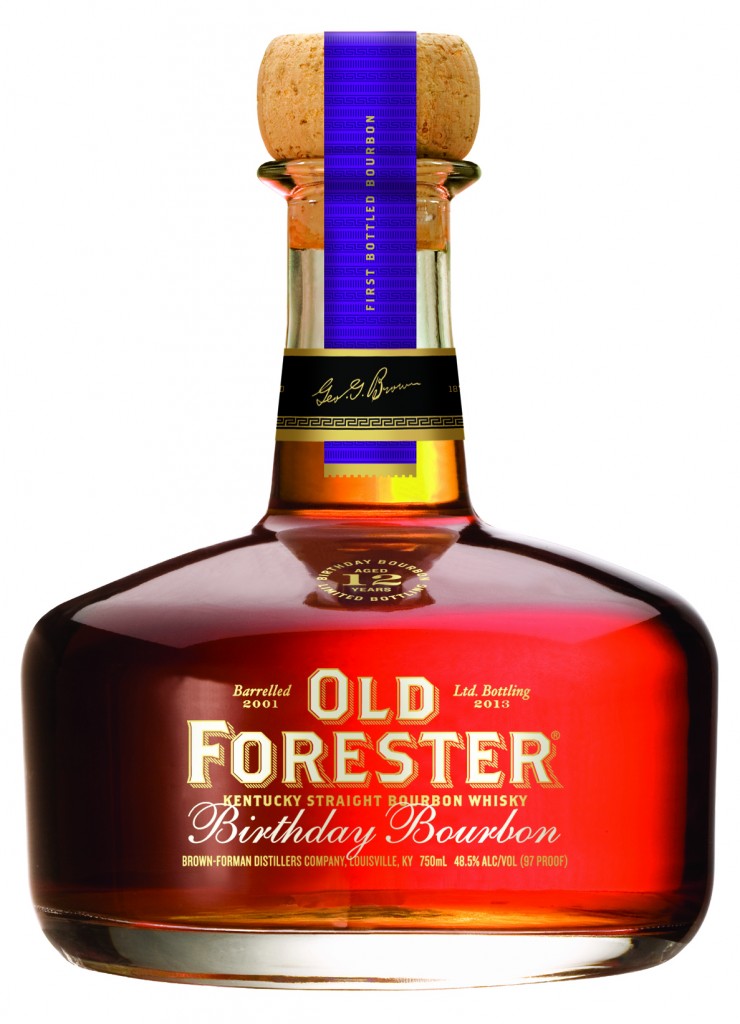
Old Forester Birthday Bourbon 2013

Old Forester Birthday Bourbon
Distilled 2001, Bottled 2013

49% ABV
$55
Website
Old_Forester_Birthday_Bourbon_2013-740x1024
What the Distillery Says:
Handcrafted by renowned Master Distiller Chris Morris, Old Forester Birthday Bourbon is vintage-dated bourbon, hand-selected from one specific day of production. The result is a one of a kind character and flavor that will never be replicated.

Each year on September 2nd – in honor of our founder George Garvin Brown’s birthday – Old Forester releases a limited-edition, 12-year old vintage-dated expression. Old Forester Birthday Bourbon has become a must-have for bourbon enthusiasts who want to experience the ultimate in rare handcrafted bourbon. Since its introduction in 2002, Old Forester Birthday Bourbon has received unprecedented acclaim, with an impressive collection of national and international whisky honors.

What Gary Says:
Nose: Burnt sugar (like you get on a nicely prepared crème brûlée), bit of a sour oak note.
Palate: Rye spice is dominant with a fair amount of oak, the sweetness that the nose telegraphed went hiding – barely detectable.
Finish: Short and dry.
Comments: I prefer the nose here over the 2014 vintage, but the palate left me wanting. With Old Forester, my expectation isn’t a tremendously sweet bourbon, but the disagreement between the nose and palate left me disappointed. With the progressive pricing scheme in recent years, I’m even more disappointed.
Rating: Average

What Richard Says:
Nose: Rich and deep with cinnamon woody notes mixed with vanilla cream and burnt caramel made from slow cooking brown sugar.
Palate: Creamy, spicy, muscular bourbon. Soaked raisins, cocoa powder, and deep cinnamon.
Finish: Heavy on the wood but it’s more of an old furniture oak.
Comments: Fantastic Brown-Forman bourbon. I’ve said for years that this is a standard bearer for their product. Sadly, unlike some others, Brown-Forman seems to know what they have on their hands and the price has creeped up five dollars a year for last few years. It pushed over $50 for the first time in 2013 and that knocked it down from a must buy on my list but it’s still damn fine bourbon.
Rating: Must Try

Old Forester Birthday Bourbon 2013 Read More »

Distillery Tour: George Dickel (2014)

IMG_0363
George Dickel…the other Tennessee whiskey. That’s not really their slogan but when I first visited Cascade Hollow over ten years ago it kind of felt like that was their only point. Since then they have expanded their product offerings, expanded their tour, and seem to be heading down the path of coming into their own.

My most recent visit to George Dickel was the early part of last year. It was an exceptionally cold spring day but it was also exceptionally beautiful. Those of you who haven’t ventured into the valleys (or “hollers” as they are called) of the Tennessee and Kentucky mountains are missing some truly beautiful country. To get to the distillery you need to take exit 105 off of US interstate 24 regardless of whether you’re coming from Nashville or Chattanooga. If your GPS or Google Maps sends you a different way ignore it. Trust me I’ve made that mistake before. From exit 105 turn right onto highway 41 South. After about 1.5 miles you turn right onto Blanton Chapel Road. Continue on for about 4 miles until you come to a stop sign where you can turn left onto Lyndell Bell Road. Follow the signs to Normandy Dam (3.5 miles) and take a right onto Frank Hines Road. Pass by the Dam and continue on Frank Hines Road into Normandy. With railroad crossing on your right, go straight onto Cascade Hollow Road and follow the signs for 1.5 miles to the George Dickel Distillery and Visitor’s Center. It’s about an hour from Nashville and an hour and a half from Chattanooga.

Now because you are whiskey people you might also be coming from Jack Daniels which is about 20 minutes away. From there take highway 55 to Tullahoma, TN. Turn left on 41A North. Turn right onto Hunters Lane between the Hampton Inn and Ruby Tuesday Restaurant. Turn left at end onto Normandy Road (Hwy. 269) and go approximately 7 miles to Normandy. At stop sign turn right across railroad tracks. Turn right again on Cascade Hollow Road. Distillery is 1.5 miles. I know you are looking at these directions thinking this is some crazy twisty way back into the middle of nowhere. Well, yes it is. Cascade Hollow is a very quiet place. However, if you think this is a crazy way to go then try one of those other routes the Google tries to send you.
IMG_0361
Once you arrive it’s time to begin the tour. They do tours from 9AM to 4:30PM Monday through Saturday. They start every 30 to 45 minutes or so but to be honest it’s pretty laid back and no one seemed in too much of a hurry. There is a basic tour which is free or an extended tour with tasting at the end for $10. Do the $10 tour. You didn’t drive all this way just zip through an abbreviated tour and not taste their whiskey did you?

When we went there were two very lovely Tennessee ladies accompanying us on the tour. They were gracious and thoroughly knowledgeable about the distillery, its history, and its products. After a brief history overview at the visitors center you set out across Cascade Hollow Road and then a small bridge over the creek on your way to the distillery. As you are crossing the lawn that wonderful smell of a sour mash distillery at works wafts towards you. If you like boiled peanuts you’ll love this.
IMG_0360
When you first enter the distillery you are inundated with a wall of noise. It can be a bit hard to hear the guides when the distillery is running. The first stop is the mash tubs where they go over the mash bill (84% Corn/8% Rye/8% Barley), the four hour mashing process, and show you the pumping of the mash up to the fermenters. On the way up they talk about Dickel’s yeast and the three to four day timing of the fermentation which results in their 6% to 8% ABV distiller’s beer. An interesting fact that we picked up was that their rye, while made on contract by MGP in Indiana, actually uses Dickel’s proprietary yeast instead of one of MGP’s yeast strains.

As you are walking around you immediately see how much more manual the Dickel process is than other large U.S. whiskey producers. There’s not a computer terminal in sight. When they say they do it manually, they mean it. Another note of contention is the contract production that is thought to be done at Dickel. Their people swear they don’t make anything other than Dickel because they don’t have the capacity. After seeing how manual their distilling is I can start to believe that.

Next, off to the stillhouse. Just beneath the still is the barreling area which is kind of neat to watch if you can be there when they are barreling. After looking at the stills we go through their distilling process. Their low wines come off a column still at about 115 proof (57.5% ABV). The high wines come off a pot still at about 130 proof (65% ABV). Off the stills the whiskey is chill filtered before going into their mellowing vats. Their reasoning was that George used to prefer the smoothness he got from winter made whiskey over other seasons. Take that for what you will. The mellowing vats have 13 feet of charcoal and perforated plates covered with wool blankets on either side. For an entire batch of distillate to trickle through takes about 7 to 10 days. From there it goes to the barrels.

After leaving the stillhouse you walk past the silos where spent grains are held prior to local farmers picking it up for livestock feed. From there you go into the warehouse where they store the barrels for private selection. The other 12 standard warehouses are on the hills surrounding the distillery. They hold about 198,000 barrels and are six racks high and 25 to 30 barrels deep in the single story warehouses. That single story design means they don’t rotate barrels. This kind of makes sense with their manual work processes. At this point in the tour the guides go through the barrel wood, the maturation process, angels’ share, etc. The No. 8 sits for five to seven years, the No. 12 is eight to ten years, and the Barrel Select is 12 years.

From the private barrel warehouse we head to the media and marketing room where you can see old and new media, photos, advertisements and memorabilia. After that is the obligatory video that marketing takes pride in. The video shows barreling if you didn’t get to see it as well as bottling and the rest of the production process. Due to bottling line capacity constraints the only things bottled on site are the private selection barrels and the Orphan Barrels for parent Diageo. Everything else is loaded onto unmarked tanker trucks and shipped to Diageo’s bottling facility in Plainville, Illinois.

After the video we head off to the tasting room. There we run through the whole line of their standard products (No. 1, No. 8, No. 12, and Barrel Select). After the tasting it’s back to the visitors center to purchase any bottles or memorabilia that may interest you. One note on the bottle purchases. There is a bottle available of private selection (9 year old when we were there) that was picked by their Master Distiller. The ones in your local liquor store picked by the store owners are around $45. The one at the distillery is about $100. The only discernible difference to me is that you get to sign the barrel that it came from there in the visitors center. I don’t know about you but my signature isn’t worth $55. Buyer beware.

Bottle aside, if you are in the area and are a fan of Dickel this is worth a stop. Cascade Hollow is a beautiful part of the country and Dickel offers a nice contrast to larger operations. So stop in, take a tour, enjoy some whiskey, and avoid that gift shop bottle. 😉

Distillery Tour: George Dickel (2014) Read More »

Cascade of Variables

I was perusing another blog recently and a saw a question about the rerelease of Old Grand Dad bourbon in all new packaging. The post went on to talk about the history of the brand. One of the commenters asked about why there is so much difference between the Old Grand Dad made by National Distillers back in the day and the one now made by Suntory Beam. That got me thinking about all the variables that go into how a particular whiskey tastes. I’ve seen focus pieces in magazines and books around certain aspects (wood management, etc.) of flavor drivers but nothing more comprehensive. Frequently, you will hear someone in the industry say that X% of the flavor comes from the wood. Whatever that percentage is I’m not going to argue with it. However, the remainder is made up of many more factors than you might think. So let’s talk about that for a few minutes.

Mashbill: The first thing that comes to mind when thinking about how a particular whiskey gets its flavor is the mashbill, or the blend of grains that make up the mash used to make the distiller’s beer. The most basic example of this is bourbon versus scotch. Single malt scotch is a barley base while bourbon is corn first with lesser components of rye, wheat, and barley. When you taste a lot of younger bourbons especially, that corn forward flavor really shines through.

Grain Varieties: After the blend of different types of grains is established the next stop in the cascade of flavor would be the varieties of each grain used. The single malt scotch industry is a great example of this. It’s all barley but the varietals vary from distillery to distillery. Some use Optic, others use Golden Promise, yet others use a mix of numerous varietals. The various varieties were first developed for increased yield and environmental resistance but there are flavor nuances too.

Malting & Peat: If you’re working with barley, whether or not you malt that barley has a distinctive impact on the flavor. If you malt all of it (single malt scotch), some of it (Irish whiskey), or none of it (some American whiskeys) then the end result can be drastically different. Taking it a step further, how you malt the barley can be one of the most impactful components of flavor? Peat smoke anyone?

Water: After getting all our grains sorted we move to the next component…water. Water is water, right? No, it isn’t. Given the environment and location, the water source can affect the flavor. Is it filtered through peat bogs or limestone? Traces of those can be found in the water. When you also take into account that a lot of distillers cut their whiskey for bottling with the same water used in distillation then as much as 60% of what’s in the bottle is that water. Do you know why Four Roses uses five distinct yeast strains? According to Master Distiller Jim Rutledge it came about as Seagrams consolidated their bourbon operations to the one facility. They didn’t want to lose the array of flavors they had so they found yeast strains in their yeast banks that mirrored the flavors from the water sources at the closed facilities.

Yeast: That was one of my better segues into yeast. So you put the grains and the water in the fermentation tanks but you need that yeast to get the whole sugar to alcohol conversion going. The yeast you use can have a significant impact on the finished product. Just look to Four Roses again. Try the five different bourbons they produce using each mashbill but with different yeasts and you begin to see a distinct difference.

Fermentation Time: How long do you let the mash ferment? There is no one right answer. Longer you get more sugar conversion and more dead yeast. Does that impact the flavor? Probably. Is it noticeable to the consumer? I have no idea.

Fermentation Vessel: Pine washback or stainless steel fermentation tank? Last year I visited a local fellow who is using large plastic tubs. Again, the method used could well be impacting the flavor of the finished product.

Still Type: Coffey, Column, Continuous, or Pot Still. What’s your weapon of choice? All impart different flavor profiles on their spirits. Woodford is a great example. Did you ever notice that no matter what whiskey they make at Woodford there is a uniquely Woodford note to the nose? Why is it so different from other bourbons or even the other Brown-Forman bourbons? Even the recently released Woodford Rye has it on the nose. I’m betting it’s that pot still they use.

Still Design: This takes the previous variable and pushes it down to a more minute level. It’s easier to see in the scotch industry. Among single malt distillers they will often talk about the shape, volume, and height of their stills in discussing the aspects of flavor. It factors in copper contact and how much reflux passes through versus rolling back into the still.

Distillation Proof: The proof or alcohol strength that the spirits comes off the still at will also impact the flavor. I’ll lump this in with barreling proof for sake of not splitting too may hairs (too late?). A great example of this is Booker’s. Beam uses the same wood, same mash, same so location, same still, etc., etc. with Knob Creek, Baker’s and Booker’s. However, Booker’s comes off at 125 proof versus 135 for everything else. They do it so they don’t have to cut it before going into the barrel but it does give Booker’s a distinctive profile.

Number of Distillations: Once, twice, three times a whiskey. Basically, the more times you distill a particular spirit the less of the impurities there are that pass into the final product. Scotch is usually distilled twice and Irish whiskey is usually distilled three times as basic examples.

Cuts: During distillation a choice is made on the front and back end of the distillation run. That choice cuts off the first part (heads) and the last part (tails) to be redistilled or disposed of. In those first and last parts are chemical compounds (congeners, etc.) that are seen as impurities but also flavor components. Depending on how much you cut off rather than let pass through to the next stage will impact your flavor.

Wood Type: New oak, refill hogshead, sherry cask, European Oak, American Oak, etc. All these are examples of the references you will hear about whiskeys. It is probably the most talked about factor affecting flavor, especially in scotch. A “sherried scotch” anyone? That’s the big thing that the cool kids are drinking now right? The wood type and what, if anything, that previously resided in the that wood will give distinctive flavors to the finished product.

Barrel Size: Now that you’ve determined your desired wood you have to figure out how big of a barrel you want. Smaller barrels give you more wood to whiskey contact but can leave the whiskey overly woody in flavor. It’s a delicate balance.

Warehousing: Stone walls or wood? Single story or four story rickhouses? The size, shape, design, and location of the warehouse can impact the maturation environment and further impact the flavor.

Barrel Location: Taking the warehouse location one step farther, within a given warehouse where the barrels are can also impact it. Some distilleries do barrel rotations throughout the life of their barrels to drive consistency. Others realize that certain parts of the warehouse are better for certain flavors and as a result certain brands come from those areas. Buffalo Trace produces a large number of brands from just two ryed bourbon mashbills. Some of those are picked only from certain locations within the warehouses. They recently released experimental releases from three distinct warehouse locations to emphasize this point.

Climate: The climate also affects the maturation which in turn affects the flavors. In Kentucky for example there are much more extreme fluctuations in temperature through the course of a year than in Scotland. That causes the whiskey to push deeper into the wood and extract farther back out with a regularity that pulls flavor compounds out of the wood more effectively.

Age: This one is kind of a no brainer but I added it for completeness.

That’s 18 variables on my list. I realize that this is not an exhaustive list. It’s a list of variables that most come to mind for me when thinking about flavor factors in whiskey. If you feel there are critical ones that I’ve missed then by all means post and we can continue the dialogue. Regardless of how many are on your list I hope the point is made that there’s more to the flavor of a whiskey than wood and water.

Cascade of Variables Read More »