Rye Whiskey

Stocking the Whiskey Bar . . . in 2026

Ok folks – third time is the charm! Richard wrote a great piece on this topic back in 2011, and I refreshed it in 2019 given a lot of changes in the whisk(e)y landscape that had taken place. It can be an interesting trip down memory lane to compare these three – or a bit depressing on the price changes over 15 years. Regardless, hope this 3rd installment is helpful!

So more friends and family seem to be either asking for whiskey when they visit, or at least more are aware of it.  If you’re the type of person who really only keeps one bottle around, and folks will like that or have water, this article probably won’t interest you.  Note we’re not judging on this – everyone is different (although – you may have noticed this is a whiskey blog, so let’s assume you’ve got a bottle or two of whiskey at home and are looking to take it to the next level).

One clarification – we’re talking about stocking a whiskey bar – NOT a whiskey collection (which is completely different).

“How many bottles should I plan on getting for a base stock in my home whiskey bar?”

It depends. If you’re just looking for bourbon or scotch then probably three well chosen bottles will get you started. If you want a nice cross section of multiple styles then I would say five to eight. It really is up to you. However, I will caution you that once you get north of 10 bottles and start heading towards 20 you starting getting into collection territory. Again, there’s nothing wrong with that but it’s a slippery slope.

“How much should I plan to spend?”

Not as little as you could have spent 15 years ago, but I suppose that can be said about most things.  But you can set a budget and not break the bank.  Or, you can go top shelf across the board and spend what used to buy a quality used car.  I’ll try to give you a few examples at various prices for each category. That way you can decide how much you want to spend based on personal preference and financial situation. Please note that the prices listed are for a standard U.S. 750ml bottle.

“Where do I begin?”

With scotch and bourbon a good framework would be to get a mixer, a classic, and a gem.

Mixer:  What I’m really referring to here is a table whiskey (not “bottom shelf” stuff you mix because that’s the only way you enjoy it). You should use the same rule of thumb for mixed drinks and cocktails as you do for cooking with wine. That means that even your table whiskey should be something you wouldn’t mind drinking by itself. There are plenty of inexpensive and tasty whiskeys out there so you shouldn’t have to buy rot gut just to use as a mixer. Here are some examples.

Scotch – Johnnie Walker Black (& Double Black), Chivas Regal 12 Year Old, Glenlivet 12 Year Old, and Glenmorangie Original can all be found in the mid $40s to $50s.

Bourbon – Wild Turkey 101, Buffalo Trace, Maker’s Mark, Elijah Craig Small Batch and Old Grand Dad Bottled In Bond can all (usually) be found for $25-$35 (although Buffalo Trace might not be as readily available). A value buy that I would also consider is Evan Williams Bottled in Bond (which is < $20 – although honestly I buy the 1.75L bottle for around $27 which may be the best value in bourbon out there today).

Classic: This should be something that typifies the category. That “used to be $1,000 a bottle but is now pushing $3,000 a bottle” of Macallan 30 Year Old may taste like heaven but when I say classic I’m thinking of a reasonably priced bottle that is pleasant and displays many of the standard characteristics of scotch or bourbon.  Again, here are a few examples in two different price buckets.

Scotch for $75 or less – Highland Park 12 Year Old ($60), Compass Box Artist’s or Glasgow blend ($45-$50), Bowmore 12 Year Old ($70), and Glendronach 12 Year Old ($73).

Scotch for $75 to $100 – Talisker 10 Year Old ($80), Balvenie 12 Yr Double Wood ($80), and Macallan 12 Year Old ($100)

Bourbon from mid $30s to up to $50 – Knob Creek ($40), Old Grand Dad 114 ($33), and Four Roses Single Barrel ($48)

Bourbon up to $70 – Knob Creek Single Barrel 120 proof ($66), Wild Turkey Rare Breed ($55), and Baker’s ($60)

Gem:  This is where you can stay reserved, or get really crazy.  Up until now you’ve probably dropped between $160 to $250 on four bottles of whiskey (2 bourbon, 2 scotch). The notion behind these bottles is to have something exceptional. Think of it as a special whiskey or two. You can lay these on your snobby or aficionado friends to get the approving nod or you can use them to show someone how something really good tastes. Alternatively, you can think of these bottles as a little more aggressive or obscure in taste. If Glenfiddich is your middle of the road then maybe one of these bottles can be a super peaty Laphroaig. You can drop $70 on one of these or several hundred. It’s up to you. Below are a few suggestions but let your interests guide your decisions.

Scotch – Laphroaig Cask Strength ($100), Lagavulin 16 Year Old ($95 – special shout out for being the ONLY whisk(e)y bottle that is the same price today as it was in 2019 – bravo!), Glenlivet 18 Year Old ($175), Glenfiddich 18 Year Old ($180), Compass Box Flaming Heart ($160)*, Highland Park 18 Year Old ($180), Balvenie 21 Year Old Port Wood ($360), Dewar’s 25 Year Signature ($155), and Macallan 18 Year Old ($420)

* This is a limited edition which I’ve intentionally avoided to this point, but unlike with bourbon – these tend to be available longer on the shelves.  I was picking up the 2012 release of Flaming Heart in 2015 (when the next one came around), and for the money – these are exceptional bottles when you see one.

Bourbon – Wild Turkey Kentucky Spirit ($65), Elijah Craig Barrel Proof ($75), Blanton’s ($85)**, Rock Hill Farms ($90)**, Booker’s ($90), and Four Roses Single Barrel Selections (non-OBSV recipes, $100)

** These used to be widely available, and I know – the point of this refresh was because Richard’s post initially included things like George T. Stagg when you could get one for $75 at the store! So I’m asterisking them to acknowledge that, but they’re not in the same ‘never see in the store’ breadth as BTAC or Pappy.

Now you may have noticed that I’ve listed both blends and single malts for scotch under each category. This is intentional. Both are very tasty and should be considered equally. I really think that you should consider getting at least one blend and at least one single malt. One is not inferior to the other regardless of what you hear from scotch snobs.

Others
Scotch and bourbon are great but there’s a wider and ever expanding world of whiskey out there waiting to be sampled. Personally, I would recommend a good rye that you can drink and mix as a staple. Rittenhouse Bottled-In-Bond ($28) or Bulleit Rye ($34) are great examples. If you’ve only ever used bourbon in your cocktails then get ready for a treat. A good rye cocktail is hard to beat.

I also think you should have a bottle of something a little different. It will allow you and your guests to expand your whiskey horizons and give you something interesting to compare and contrast. A nice bottle of Hibiki Japanese Harmony ($100), Redbreast 12 Year Old Irish Pot Still Whiskey ($75), or Amrut Fusion Indian Whisky ($100) would all be nice additions.

“What about other spirits to have on hand?”

Believe it or not, I don’t only drink whiskey. I often enjoy other fine brown spirits. Around the holidays I especially enjoy a nice brandy or cognac after a big meal. Pierre Ferrand Ambre Cognac ($46) or Reve Bleu XO Cognac ($60) are both nice examples.

If a nice aged rum is more your speed then maybe a bottle of Cruzan Single Barrel ($30), Appleton Estate Extra 12 Year Old Rum ($44), or Bacardi Reserva Limitada Rum Anejo ($120) would give you something nice to sip with guests (and unlike the whiskey, the prices haven’t gone crazy in the last 8 years!).

“Is there anything else I need?”

It’s probably a good idea to have a few other basic ingredients on hand for cocktails. Below is a suggested list but you can add or subtract as you see fit. Remember, this list is focused on whiskey cocktails. If you’re doing a White Russian or a Sex on the Beach then that’s something entirely different.

  • Simple Syrup (make your own)
  • Sodas (Coca-cola, diet cola, ginger ale, club soda, tonic water, etc.)
  • Bitters (Angostura, Peychaud’s, etc.)
  • Fruit – Juice and whole fruit (Lemons, oranges, maraschino cherries, etc.)
  • Vermouth – Sweet and Dry
  • Liqueurs

I would recommend that you actually look at the kind of cocktails you plan to make and back into a list of additional ingredients instead of blinding buying stuff that the guy on the internet said you had to have. Having a huge selection of cocktail accouterments looks cool but if you never use it then it’s a waste.

Of course, glasses are a must (although whether dedicated glassware is in order is entirely up to you).  We share a run down on basic glassware here (and if you’re only stocking one – I’d go with your basic rocks glasses).

“Wait a minute. What about vodka and tequila?”

Like your mom said about little Scotty Powell down the street…”You don’t need friends like that.” In all seriousness, we were talking about stocking a nice selection of whiskeys. I could go on and on with my belligerent opinions of the vodka and tequila culture that’s exploded in the last 15 to 20 years but that’s not the point of this article. Look, if you need to have vodka and tequila, and a good host probably should, then you don’t need to fret over the bottles as much as you might think. Probably about 99% of vodka and tequila consumption in the U.S. occurs with some type of mixer. As long as you’re not buying the stuff off the bottom shelf in the plastic jugs you’ll probably be okay with the majority of brands when making a vodka tonic, vodka and cranberry, or margarita. Personally, I buy Kirkland Signature brand vodka and anejo tequila at Costco. Both are very good quality and ridiculously well priced. If you’re worried that your snobby friends will scoff because you have Costco brand or Stolichnaya vodka instead of Grey Goose or Ciroc then pick up a nice decanter to keep it in. It will class up your bar a little and then if they ask what it is you can tell them whatever the hell you want.;)

If you’re in a quandary the next time you go to the liquor store to stock up then I hope this helps. As always, these are merely my opinions on the subject. Let your taste and wallet be your guide. If you have any questions or need additional suggestions please send me an email. Enjoy the holidays and share some good whiskey with good company.

Drink wisely my friends,

Richard
(updated by Gary)
Stocking the Whiskey Bar . . . in 2026 Read More »

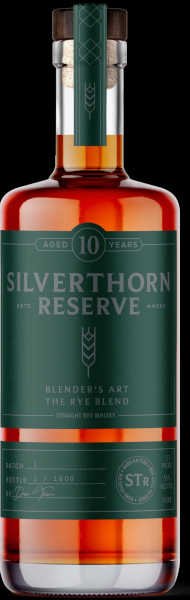
Silverthorn Reserve Blender’s Art Rye Blend 10 Years (Batch 1)

Silverthorn Reserve Blender’s Art Rye Blend 10 Years (Batch 1)
Straight Rye Whiskey

56.5% ABV
$100
Website
Silverthorn Reserve Rye Blend 10 Year
We would like to thank Silverthorn Reserve and The Whiskey Bard for sending us a sample to review.

What the Producer Says

This blend of 8 barrels brings together 13-year high-rye, with 10-year high-rye, 10-year low-rye, and 1 barrel of 10-year high-rye double oak. The nose is reminiscent of a cinnamon pastry with vanilla icing. The palate moves from caramels and brown sugar into soft baking spices before seamlessly finishing with rich, sweet oak.
COMPOSITION:
• 12% – 13Y – 95R Straight Rye Whiskey – Indiana
• 36% – 10Y – 95R Straight Rye Whiskey – Indiana
• 37% – 10Y – 51R Straight Rye Whiskey – Indiana
• 15% – 10Y – DO – 95R Straight Rye Whiskey – Indiana
Cask Strength. Non-chill filtered. Hand bottled. Batch size: 8 barrels. 113 Proof (56.5% ABV).

What Gary Says

Nose: Brown sugar, vanilla, cinnamon roll, mint and oak.
Palate: Caramel, honey, mint, cinnamon, pepper, oak and a hint of dark chocolate.
Finish: Moderate, drying with oak, pepper spice and honey.
Comments: This is not as sharp as the Remus Repeal Reserve Rye, but similarly takes water well. I was surprised at the mashbill, as this is much more rounded than most other 95% rye mashbills. A bit of water brings out some orange zest on the nose and thickens the mouthfeel nicely, bringing out brown sugar and chocolate.

Rating: Stands Out

Silverthorn Reserve Blender’s Art Rye Blend 10 Years (Batch 1) Read More »

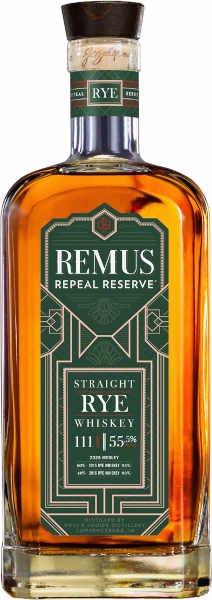
Remus Repeal Reserve Straight Rye Whiskey 2026 Release

Remus Repeal Reserve Rye 2026
Straight Rye Whiskey

55.5% ABV
$80
Website
Remus Repeal Reserve Straight Rye Whiskey 2026 Release
We would like to thank Luxco and The Brand Guild for sending us a sample to review.

What the Distillery Says:

In celebration of the 10th anniversary of the Remus Repeal Reserve collection and the repeal of Prohibition, Remus introduced its first-ever rye release: Remus Repeal Reserve Rye Whiskey. Crafted at Ross & Squibb Distillery in Lawrenceburg, Indiana, this limited-edition straight rye whiskey is comprised of 2015 and 2016 reserves of Remus’ signature 95% rye mash bill, bottled at 111 proof (55.5% ABV).

“With our first-ever rye, we get to show a different side of our expertise,” said Ian Stirsman, Master Distiller at Ross & Squibb Distillery. “We’re proud to share both releases as a true reflection of our craft.”

TASTING NOTES
Aroma: Butterscotch, caramel, French oak, and cardamom
Palate: Mint, star anise, toffee, and fennel
Finish: Closes with candy-coated fennel seed

What Gary Says

Nose: Bright rye spice with mint, thyme, vanilla, butterscotch, toasted oak with lemon zest.
Palate: Major rye spice with mint, anise, cinnamon, citrus zest, vanilla, oak and pepper spice.
Finish: Long and drying with fennel, oak and a bit of caramel.
Comments: Wow, this is a deliciously spicy rye! Really intense, and an excellent addition to the lineup. Don’t get me wrong – I’m a big fan of the Remus Repeal Reserve bourbon, including this year’s release – but I tried this immediately following and this was my favorite.

Rating: Must Try/Must Buy

Remus Repeal Reserve Straight Rye Whiskey 2026 Release Read More »

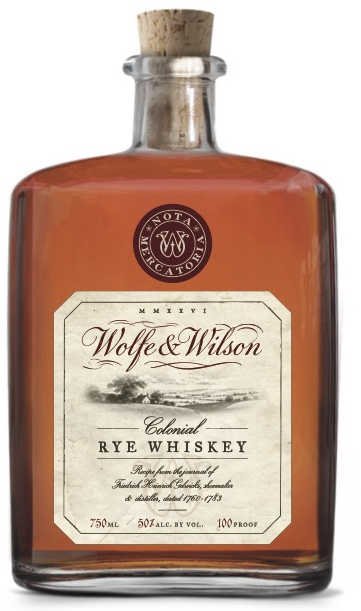
Wolfe & Wilson Straight Rye Whiskey

Wolfe & Wilson Straight Rye Whiskey

50% ABV
$100
Website
Wolfe & Wilson Straight Rye Whiskey
We would like to thank Stoll & Wolfe Distillery and The Whiskey Bard for sending us a sample to review.

What the Distillery Says

PRESS RELEASE
New Wolfe & Wilson Straight Rye Is A True 250th Anniversary Representation of American Whiskey History
Drawn directly from a colonial-era booklet, this unique expression by two craft distillers with a love for the past showcases a genuine attempt to recreate early American distilling practices using documented historical recipes, heritage grains, and period-appropriate techniques. It is a true representation of a 250th anniversary whiskey.

LITITZ, Pa. – June 1, 2026 – Stoll & Wolfe, a storied craft distillery at the forefront of high-quality Pennsylvania rye whiskeys, is proud to announce Wolfe & Wilson Straight Rye Whiskey, a unique collaboration between two masters of the distilling arts, Stoll & Wolfe head distiller Erik Wolfe and southern Indiana farmer distiller Alan Bishop (formerly of Spirits of French Lick). This whiskey is based upon an old colonial-era recipe and serves as a true testament to the journey of this noble spirit through America’s 250 years.
Wolfe & Wilson Straight Rye Whiskey draws its inspiration from a pamphlet written by Frederick Heinrich Gelwicks, an important piece of early American distilling lore from the late 1700s to early 1800s, documenting actual working recipes used by Pennsylvania distillers during that era. A recipe from that publication resulted in a whiskey with a unique grain combination of rye malt, wheat, rye, and oats, fermented with wild yeast and cheese culture, and aged in new American oak barrels at 105 proof.
“Collaborating on translating a nearly 300 century old recipe is a unique opportunity to explore the roots of our local distilling traditions by bringing this whiskey to life and allowing modern consumers to experience a spirit nearly lost to history,” said Erik Wolfe.
Wolfe and Bishop, sharing a fundamental distilling philosophy and ethos that values flavor over efficiency and also honors traditional production methods balanced against modern concerns, began collaboration on this whiskey back in 2023. The challenge for them was how to adapt for today’s distilling world a recipe of 1 bushel rye malt, 1 bushel wheat, 1 bushel rye, and 3 pecks of oats.
Sourcing heritage grains from Pennsylvania family farms, including the Kline farm that’s tied to Stoll & Wolfe, the two set out on an epic undertaking to recreate something few in the modern era would even consider. A testament to their combined creativity and fine attention to historical details, the expression is designed to give today’s whiskey drinker a glance at what was being enjoyed at the birth of a nation.
“Bringing the knowledge brought to Indiana by early PA Germans back East to PA is one of the highlights of my career,” said Alan Bishop. “That we stuck to the ideals of the colonial distillers while implementing modern technological advantages speaks to just how well versed in the art of distillation our forefathers were. To do such great work alongside Erik and Aviana is a rare opportunity!”
Besides these nods to the past, other elements of historical consideration were factored in as well, such as the addition of dried fruits during the distillation process and aging in a colonial-era tobacco farm. The Wolfe & Wilson straight rye, given all of this, presents itself as an authentic representation of a bygone era with legitimate colonial ties, explicitly differentiating it from more generic 250th anniversary products.
Wolfe & Wilson Straight Rye Whiskey, Batch 1, was aged a minimum of two years in new charred American oak before being bottled at 100 proof. The product name Wolfe & Wilson carries layered personal and historical significance, as “Wolfe” represents Erik’s surname (Wolfe), while “Wilson” is Alan’s mother’s maiden name.
Available at a price point of $80, only 1000 750 ml bottles of Batch 1 will be available starting July 4th through Stoll & Wolfe’s tasting room in Lititz, Pennsylvania, and online in the contiguous United States.

What Gary Says

Nose: Rye malt funk with a touch of oak, cinnamon, dried herbs like fennel and thyme with a hint of bay leaves.
Palate: Creamy mouthfeel, malted rye spice with herbal/savory spice notes, honey, orange zest, anise with pepper spice that crackles before fading.
Finish: Moderate in length with pepper spice giving way to honey, rye spice and Earl Grey tea.
Comments: First a word about a word: funk. That may sound odd or unflattering but it isn’t meant that way. Heck – ask someone what Laphroaig taste like, and wet band-aids are an apt description . . . from someone who loves Laphroaig  (note – this is NOTHING like Laphroaig). The Whiskey Bard asked me if I’d ever had the chance to try colonial-era whiskey, and I’m thankful to say that I have (you can read my review of George Washington Rye here). This does remind me a bit of that; very unique! Now I’m not sure about the new oak aging (George Washington didn’t do that, but no one knows for sure where that started), but I’m focused more on what’s in the glass – and if you have not had a chance to try colonial-era whiskey, I would highly recommend it!

Rating: Must Try

Wolfe & Wilson Straight Rye Whiskey Read More »

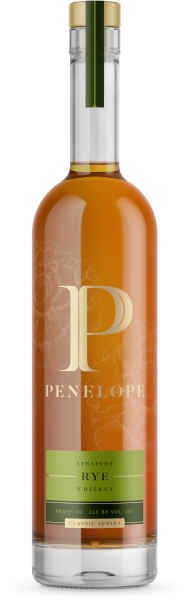
Penelope Straight Rye Whiskey

Penelope Straight Rye Whiskey

46% ABV
$35
Website
Penelope Straight Rye Whiskey
We would like to thank Luxco and The Brand Guild for sending us samples to review.

What the Blender Says

Our Straight Rye Whiskey is crafted for a balanced, approachable profile, showcasing its spice and depth without overpowering the palate. Smooth, layered, and complex, it reflects our continued focus on quality and innovation, bringing another fresh perspective to American whiskey.

Tasting Notes
AROMA: Bright spearmint citrus zest, layered with baking spice and light toasted oak.
BODY NOTES: Rye spice, cracked pepper, caramelized sugar, cool herbal mint and subtle citrus.
FINISH: Lingering spice, almond, polished oak and mint-caramel fade.

Mashbill
93% Rye
7% Barley Malt

St. Louis, MO — (June 9, 2026) — Penelope Bourbon announces the launch of its Classic Series and its new expressions: Kentucky Straight Bourbon Whiskey and Straight Rye Whiskey, two foundational whiskeys designed for everyday drinking occasions.

Over the past eight years, Penelope has built its reputation through experimentation, blending, and innovation, all with the goal of creating exceptional whiskey experiences that continually bring consumers something new to explore and enjoy. The Classic Series continues that journey, reflecting Penelope’s belief that there is always more to discover in the world of bourbon and whiskey.

“Since the beginning, our mission has always been to deliver the best possible whiskey to the consumer with every product we release,” said Michael Paladini, Founder and Vice President of Strategy at Penelope Bourbon. “We didn’t always follow the traditional playbook, but we always prioritized quality above all else. We’ve been talking about and working toward introducing Kentucky Straight Bourbon Whiskey and Straight Rye Whiskey for a long time, but we wanted to make sure they were perfect before releasing them.”

Penelope Kentucky Straight Bourbon Whiskey is carefully crafted with a mashbill of 78% corn, 10% rye, and 12% barley malt to deliver a versatile profile that is both approachable for everyday enjoyment and refined enough for whiskey aficionados. On the nose, it opens with aromatics of butterscotch, vanilla bean, candied orange, and toasted sugar. The palate is smooth and layered with notes of brown sugar, honeyed corn, cinnamon, and creamy mint, and finishes with warm and lingering sweetness of caramel and dark chocolate with warm spice. Notably, this release also marks a meaningful milestone for the brand, representing the first time Penelope has worked at scale with distillate from Kentucky.

Complementing the bourbon, Penelope Straight Rye features a refined, approachable spice profile with layered complexity. Distilled in Indiana with a mashbill of 93% rye and 7% malted barley, it opens with bright aromatics of spearmint and citrus zest, a body of rye spice and caramelized sugar, and a lingering, balanced finish, delivering character without overpowering the palate.

“These expressions have been in development for a while,” said Danny Polise, Founder and Master Blender of Penelope Bourbon. “Using Kentucky distillate for the bourbon, like we’ve done in past blends, felt like a natural step as we worked to create something we genuinely liked. We kept dialing in the blends until they felt right, especially with the Straight Rye release.”

Both expressions are bottled at 92 proof and crafted to appeal to a wide spectrum of drinkers, reflecting Penelope’s commitment to quality, innovation, and modern craftsmanship. By leveraging its innovation-first approach, Penelope is demonstrating a new kind of credibility: one rooted in hands-on expertise, curiosity, and a willingness to push boundaries before refining tradition.

What Gary Says

Nose: Bright with mint, tangerine zest, vanilla and a touch of oak.
Palate: Creamy mouthfeel with caramel, lemon-lime, orange, mint, hint of cinnamon and pepper..
Finish: Moderate in length, drying with honey, caramel, mint and pepper spice.
Comments: That’s what I’m talking about – none of this ‘barely legal’ rye stuff here. Just bright rye spice throughout, and bringing that classic rye character without it being too sharp (not that I mind that in a rye whiskey, but appreciate when it comes full of spice and well balanced). While I enjoyed both of these Classic Series offerings, if I had to pick one to go with it’d be the rye for sure. Also appreciate some level of transparency by the folks at Penelope with including the mashbills, and acknowledging Indiana as the source of the rye (where in my humble opinion, there are folks who have really dialed in the craft).

Rating: Stands Out/Must Try

Penelope Straight Rye Whiskey Read More »